
M-Pesa now has 40 million active users in Kenya. If your website or app doesn't accept M-Pesa, you're leaving serious money on the table. Here's everything you need to know.
In March 2026, Safaricom announced that M-Pesa has reached 40 million active users - a milestone that cements its position as not just Kenya's dominant payment system, but one of the most important financial platforms on the continent. For any business operating in Kenya, the message is simple: if you're not accepting M-Pesa online, you're making it harder for your customers to pay you.
But many business owners are confused about how M-Pesa integration actually works, what it costs, and which approach makes sense for their business. This guide breaks it all down.
The Two Main Approaches to M-Pesa Integration
1. Direct Safaricom Daraja API Integration
The Daraja API is Safaricom's official developer platform. It gives your application direct access to M-Pesa functionality - STK Push (where a payment prompt appears on the customer's phone), C2B (customer to business), B2C (business to customer disbursements), and more.
This is the most flexible option. It gives you full control over the payment experience and typically offers the lowest transaction costs. But it requires proper software development - you'll need a backend developer who understands REST APIs, callbacks, and security handling.
Who it's for: Businesses with an existing development team or those building a custom platform from scratch.
2. Payment Gateway Integration (Recommended for Most SMEs)
Payment gateways like Pesapal, Flutterwave, and IntaSend act as a bridge between your website and M-Pesa. Instead of dealing with Safaricom's API directly, you integrate with the gateway, which handles the M-Pesa complexity for you.
The trade-off is a slightly higher transaction fee (typically 2–3.5% per transaction), but you get a much faster integration, a hosted checkout page, and support for multiple payment methods beyond just M-Pesa.
Who it's for: E-commerce stores, booking platforms, and any business that wants to get up and running quickly without deep technical resources.
The STK Push Experience - Why It Matters
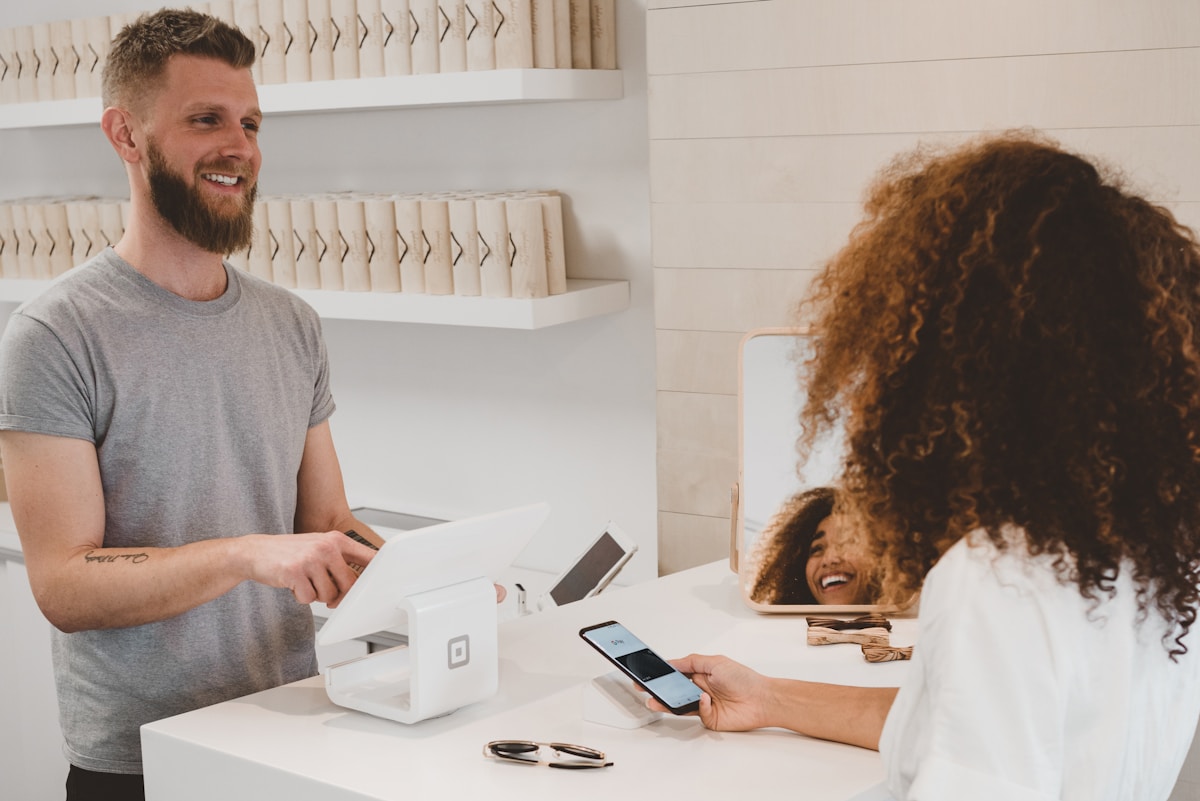
When a customer clicks "Pay with M-Pesa" on a well-integrated website, three things happen in seconds: a payment prompt appears on their phone, they enter their M-Pesa PIN, and payment is confirmed on your site. No typing long paybill numbers, no back-and-forth.
This friction-free experience is important. Every extra step in a checkout flow reduces your conversion rate. A study of Kenyan e-commerce behaviour consistently shows that sites with native M-Pesa STK Push outperform those that ask customers to manually pay and submit a transaction reference.
What About Lipa na M-Pesa (Paybill / Buy Goods)?
Many businesses already have a Paybill or Till Number. This works fine for in-person transactions, but asking online customers to "go to M-Pesa, select Pay Bill, enter business number, account number..." is a conversion killer.
If you have an active Paybill, it can be connected to the Daraja API so you get notified instantly when a payment comes in, and the process can be automated. But you still need development work to make this happen properly - and to reconcile payments with orders automatically.
Getting Daraja API Access: The Requirements
To integrate M-Pesa via Daraja directly, you need:
- A registered Kenyan business (with Safaricom Business account)
- An active M-Pesa Paybill or Till Number
- A developer account on the Safaricom Developer Portal
- A live, publicly accessible server (no localhost)
- SSL certificate on your domain (HTTPS mandatory)
The approval process takes 2–4 weeks for sandbox testing, then another review before going live. A good developer handles all of this.
What Does M-Pesa Integration Cost?
The development cost for integrating M-Pesa into an existing website or app typically ranges from KES 20,000–80,000 depending on complexity - more if you need custom reconciliation logic, automated receipts, or refund workflows.
On the transaction side, Safaricom charges fees per transaction on the Daraja API (check current rates on their portal - they vary by transaction type). Payment gateways charge 2–3.5% per successful transaction.
Mobile App M-Pesa Integration
Mobile apps follow the same principles but require platform-specific implementation. An Android or iOS app will trigger an M-Pesa prompt via the Daraja API the same way a website does, with the callback confirming payment status to your backend server. The development complexity is similar, though mobile apps need to handle background callbacks carefully.
The Bigger Picture
Kenya's payment ecosystem in 2026 is increasingly hybrid. Banks are embedding M-Pesa into their products, WhatsApp is emerging as a sales channel, and even card payments are growing. A modern Kenyan business website should ideally support M-Pesa, card payments, and bank transfer - giving every customer a way to pay that works for them.
At Tukoweb, we've integrated M-Pesa into dozens of systems - from simple e-commerce stores to complex lending portals. The technical part is straightforward when you've done it enough times. The key is getting it right first time: secure callbacks, proper error handling, and a payment flow that doesn't confuse your customers.
Ready to add M-Pesa to your website or app? Contact the Tukoweb team for a free technical assessment.